IMA in text most often means “I’m going to.” It’s a quick spelling of “I’m gonna,” and people use it to announce what they plan to do next. Less often it stands for “I must admit” or “I might add.”
The right reading depends on context. Below you’ll find the main texting meaning, the Hebrew word ima, how the term shows up on Instagram, Snapchat and TikTok, and when you should skip it.
What Does IMA Mean in Text?
IMA means “I’m going to” in text messages. It’s a casual shortening of “I’m gonna,” built from the sound of the spoken phrase. People use it to announce a plan, such as “IMA call you after class.” You’ll also see it written as ima, imma or i’ma.
The spoken form isn’t new. Dictionary.com traces “I’mma” in American English to the early 1970s. Texting didn’t invent the sound. It just gave the sound a shorter spelling.
Think of it as a verbal habit that learned to type. When you say “I’m going to” quickly out loud, it often squeezes down to “eye-muh.” IMA writes that squeezed sound on the screen.
Ima meaning Hebrew
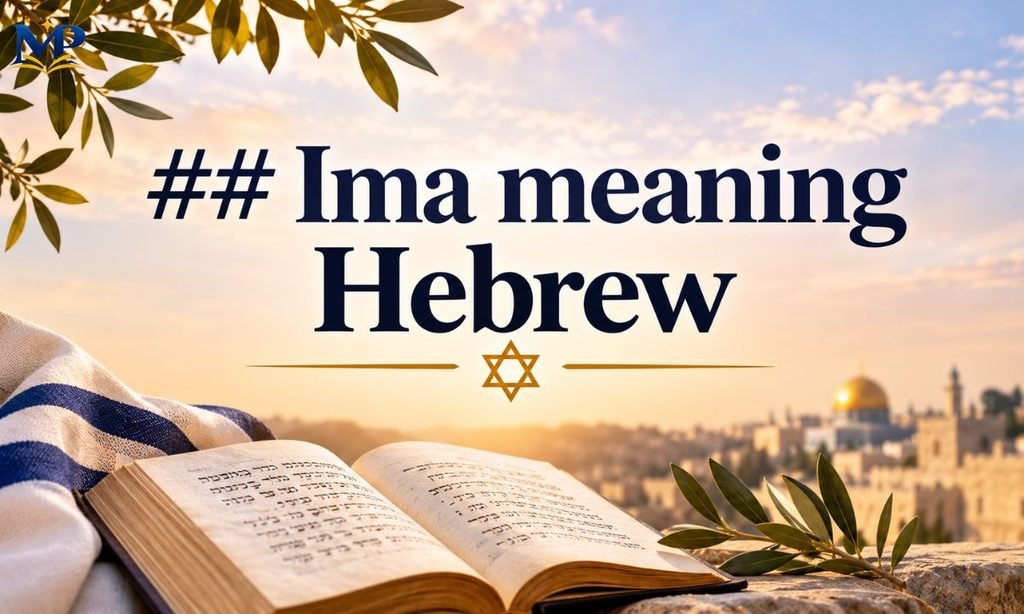
In Hebrew, ima (אמא) means “mother.” Hebrew speakers use it the way English speakers say “mom” or “mama.” Children call their mothers ima every day, and the word carries a warm, family feel.
The word has an interesting history. According to My Jewish Learning, ima and abba aren’t originally Hebrew. They come from Aramaic. The older Hebrew words for mother and father are em and av.
Ima also works as a girl’s given name, and name sites list its meaning as “mother.” Pronunciation sets it apart from the slang. The Hebrew word sounds like “ee-mah” while the texting term sounds more like “eye-muh.”
Don’t mix the two up. A message that says “IMA be there soon” has nothing to do with anyone’s mother.
Ima meaning in text from a girl
When a girl texts IMA, it usually carries the same meaning as anyone else’s message. It means “I’m going to.” The sender’s gender doesn’t change the definition.
What changes is the tone around it. “IMA text you later” is simply a plan. “IMA miss you” is a warm line because of the words that follow. You can’t read romance into the abbreviation itself.
If the message feels unclear, look at the next word. A verb right after IMA almost always signals a plan. A comma right after it often signals a confession. When you still can’t tell, ask. A short “wait, what do you mean?” beats a wrong guess.
What does ima mean on instagram
On Instagram, ima means “I’m going to” just as it does in a regular text. You’ll spot it in direct messages, comments and captions. Instagram doesn’t give it a special platform-only meaning.
A caption like “IMA post the full video tomorrow” promises an upcoming post. A comment like “IMA need this recipe” shows intent. Both lines use the same plain definition.
Instagram simply gives the term more room to appear. People write fast in DMs and comment threads. Shortcuts like IMA fit that rhythm well.
Ima meaning in text urban dictionary
Urban Dictionary entries for ima mostly define it as “I’m going to” or “I’m gonna.” That matches how slang dictionaries explain it. Because anyone can submit an entry there, you’ll also find jokes and personal takes.
Treat user-submitted pages as a clue to how people talk. They’re not a final authority. Slang.net, for example, lists three readings: “I’m going to,” “I must admit” and “I might add.” The first one dominates by a wide margin.
If an Urban Dictionary entry gives a wildly different meaning, check how the word appears in an actual message. Real conversations settle the question faster than any list.
What Does IMA Mean in Text Message Conversations?
In a text conversation, IMA tells the other person that an action is coming. It works like a tiny status update. The reader learns what you’ll do without a long sentence.
Here’s a typical exchange:
Jordan: Are you still at the library? Sam: Yep. IMA leave in ten minutes. Jordan: Cool. I’ll grab us a table.
Sam’s IMA does one job. It announces a near-future action. Jordan understands the plan instantly and replies with a plan of his own.
IMA Meaning in Text Explained Simply
IMA is a typed version of the way people talk. You say “I’m going to.” Then you say “I’m gonna.” Then it slurs into “eye-muh.” Finally someone types that sound as IMA.
That’s the whole story for the main meaning. You can swap IMA for “I’m going to” in almost any message and the sentence still works. “IMA study tonight” becomes “I’m going to study tonight.” Nothing else changes.
Why Do People Use IMA in Texting?
People use IMA because it’s fast and sounds natural. Typing three letters beats typing three words. It also matches how friends speak, which makes a message feel relaxed instead of stiff.
Tone matters too. “I am going to call you later” can sound formal or even cold between friends. “IMA call you later” sounds easy and friendly.
Music helps spread it as well. Rap and pop lyrics often use the spoken form, and fans carry that phrasing into their own chats. Slang.net notes that the term appears in rap partly because it rhymes better and sounds relaxed.
Different Meanings of IMA in Text
IMA has one dominant meaning and two smaller ones in text.
- I’m going to: the main meaning. Example: “IMA hit the gym after work.”
- I must admit: a confession opener. Example: “IMA, I didn’t expect that movie to be good.”
- I might add: a way to tack on a point. Example: “The deadline is Friday, IMA.”
You may also see a few sites list “I’m” as a loose reading. It’s rare and easy to confuse with the main meaning, so you can safely ignore it in most chats.
Rank them by frequency. The first meaning covers the vast majority of messages. The other two appear mostly in friendly debates or casual confessions.
Does IMA Mean Something Outside Texting?
Yes. Outside casual chat, IMA can point to unrelated things. These meanings almost never appear in text messages between friends.
- Indian Military Academy: a military training institution in Dehradun, India.
- Thyroid ima artery: a small anatomical variation in some people’s neck blood supply.
- Ideal mechanical advantage: a physics and engineering term for simple machines.
- IMA file: a disk image file extension used in computing.
Capital letters and a technical setting usually give these away. A sentence about artery anatomy or lever physics clearly isn’t texting slang.
How Context Changes the Meaning of IMA
The words around IMA tell you which meaning applies. Three quick clues cover nearly every case.
First, check what follows. If a verb comes next, such as “IMA go” or “IMA eat,” it means “I’m going to.” Second, check for punctuation. A comma straight after IMA often signals “I must admit.” Third, check the position. IMA at the end of a thought, after you’ve made a point, can mean “I might add.”
Hebrew works differently. The word appears in conversations about family or language. If someone asks “how do you say mom in Hebrew,” then ima means mother.
Examples of Real Conversations
Here are two short examples that show different meanings.
Making a plan:
Maya: Dinner at 7? Chris: Sure. IMA bring dessert.
Making a confession:
Leo: Did you like the finale? Nia: IMA, I cried at the end.
In the first chat IMA means “I’m going to.” In the second it means “I must admit.” The surrounding words make both readings obvious.
Is IMA Formal or Informal?
IMA is informal. It belongs in friendly texts, social media posts and casual chats. Skip it in school essays, business emails and job applications.
A good rule helps here. If you’d say “gonna” out loud to the person, IMA works in writing. If you’d stay formal in person, stay formal in text.
IMA on Snapchat, TikTok, and Instagram
IMA means the same thing on all three platforms. It still means “I’m going to.” No major platform assigns it a unique definition.
On Snapchat you’ll see it in quick chats and captions. On TikTok it shows up in comments and video text. On Instagram it appears in DMs and posts. The platform changes the setting but not the meaning.
Be cautious about sites that claim a different secret meaning for each app. Those claims usually lack real evidence.
IMA vs Similar Text Slang
Several short phrases overlap with IMA. A quick comparison clears up the confusion.
| Term | Meaning | Example |
| IMA | I’m going to | “IMA head home.” |
| Imma | I’m going to (alternate spelling) | “Imma text her.” |
| Gonna | Going to | “I’m gonna sleep.” |
| Finna | Fixing to, about to | “Finna eat.” |
| IMO | In my opinion | “IMO, it’s too long.” |
IMA, imma and i’ma all point to the same meaning. IMO looks similar but means something completely different. Always double-check the letters.
IMA vs Imma vs I’ma: Which Spelling Is Correct?
None of them is “correct” in formal English because all three are slang. Imma and i’ma appear more often in lyrics and casual posts. IMA is the shortest and most common in quick texts.
If you want a spelling that readers recognize, imma is probably the clearest. It looks like a word. IMA in capital letters can look like an organization or acronym, which is why context sometimes matters.
Common Mistakes People Make With IMA
The most common mistake is assuming IMA always means one thing. Most of the time it means “I’m going to.” Sometimes it doesn’t.
Other mistakes include:
- Using IMA in formal emails or school work
- Reading it as the Hebrew word for mother in a normal text
- Confusing it with IMO
- Trusting a random website’s claim of a hidden meaning
- Writing it without a verb, which leaves the sentence unclear
Slow down and read the whole sentence. The answer almost always sits in the next word.
Is IMA Safe to Use?
IMA is safe to use. It’s a harmless, everyday abbreviation with no offensive meaning. The only risk is confusion, not harm.
If your reader might not know slang, spell out “I’m going to.” That’s common sense for older relatives, teachers or new coworkers. It protects clarity.
How Text Slang Like IMA Became Popular
Text slang spread because typing was slow and messages were short. Early mobile phones limited characters and made abbreviations useful. Online chat rooms and social media kept the habit alive.
IMA followed a slightly different path. The sound existed in speech first. Dictionary.com places “I’mma” in American English from the 1970s. Texting later turned that spoken shortcut into a written one.
Should You Use IMA?
Use IMA with friends and in casual chats. It’s quick and sounds natural. Avoid it in formal or professional writing.
Think about your reader before you hit send. A close friend will get it immediately. A hiring manager might not. Match your language to the person.
Real-World Communication Tip
When you’re unsure what someone means, ask a short question. “Do you mean I’m going to?” takes five seconds. A wrong guess can take much longer to fix.
You can also test any slang by swapping in the full phrase. If “I’m going to” fits the sentence, IMA probably means exactly that.
Other Popular Texting Terms Related to IMA
A few other terms often appear near IMA in casual chats:
- IMO: in my opinion
- IDK: I don’t know
- BRB: be right back
- TBH: to be honest
- FYI: for your information
- Gonna: going to
- Finna: fixing to or about to
Learn a handful of these and most casual messages become easy to read.
Explore More Meaning Guide:
LKR Meaning in Text Messages and Social Media (2026)
TSTS Meaning in Text: Definition, Uses & Examples (2026)
PU Meaning in Text: Definition, Uses & Examples (2026)
Conclusion
IMA most often means “I’m going to” in text. It’s a casual spelling of “I’m gonna” that people use to share plans quickly. The Hebrew ima, meaning mother, is a separate word with its own sound and history.
Look at the words around IMA to find the right reading. Keep it for friendly chats and use full phrases when you need a formal tone.
Frequently Asked Questions
What does IMA mean in a text?
IMA means “I’m going to” in a text. It’s a quick spelling of “I’m gonna” that people use to announce a plan.
What does ima mean in Hebrew?
In Hebrew, ima means “mother.” It’s the everyday word Hebrew speakers use for “mom,” and it has Aramaic roots.
Is IMA the same as imma?
Yes. IMA, imma and i’ma all mean “I’m going to.” They’re just different casual spellings of the same spoken phrase.
Can IMA mean “I must admit”?
Yes. When a comma follows IMA and a confession comes next, it usually means “I must admit.” It’s far less common than “I’m going to.”
Is IMA appropriate for professional emails?
No. IMA is informal slang, so write “I’m going to” in professional emails, school work and other formal messages.

Abdul Rehman is a content writer at MeanPrime, providing clear and reliable insights into word meanings, name origins, phrases, and language.