PM in chat stands for “private message.” It’s a message that only you and the recipient can read. Nobody else in the thread, group, or comment section sees it.
The meaning shifts slightly with context. This guide covers texting, social media, work, and the clock. You’ll also see how PM differs from DM and how to reply when someone says “PM me.”
What Does PM Mean in Text?
PM in text means “private message.” Someone who writes it wants to move the conversation out of public view and into a one-on-one chat.
You’ll usually see it as a request. “PM me the details” means “send me the details privately.” It can also work as a promise. “I’ll PM you” means “I’ll message you in private.”
The word works as both a noun and a verb. A PM is the message itself. To PM someone is the act of sending it. That flexibility explains why the term has survived for so long.
Pm Meaning in Chat From a Girl
When a girl writes PM in chat, it means private message. The abbreviation carries no romantic code on its own.
Tone and setting decide the real intent. In a Facebook group, “PM me” from a seller or organizer is practical. She wants you to continue the conversation elsewhere. From a friend in a group chat, it may mean she has something personal to share.
Some readers assume PM signals flirting. It doesn’t. A girl asking you to PM her might be selling a bike or sharing gossip. She might also be inviting a more personal conversation. Look at the surrounding message and your relationship with her before you decide.
Meaning of PM in WhatsApp Chat
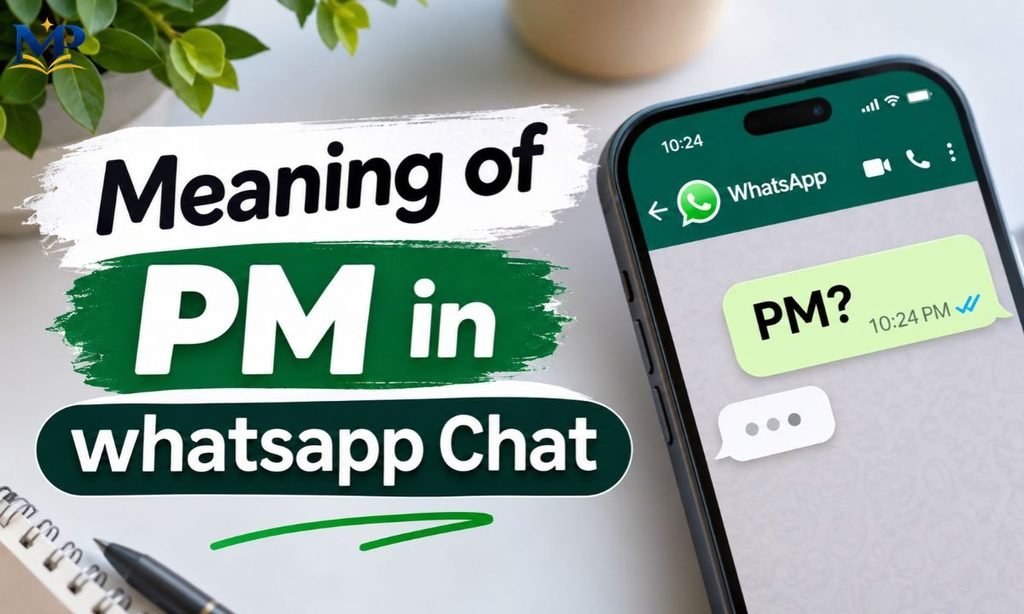
PM isn’t a button or an official feature in WhatsApp. People use it as casual shorthand for sending someone a one-on-one message.
WhatsApp has individual chats and group chats. If someone posts in a group and says “PM me,” they want you to open a separate chat with them. You can tap their name or number and start a direct conversation.
Many people in WhatsApp circles simply say “message me” or “text me.” PM still pops up because it’s short and familiar from older forums and social networks.
Pm Meaning in Chat Urban Dictionary
Crowdsourced slang sites list “private message” as the main meaning of PM. That matches what most online communities mean.
Urban Dictionary entries come from user submissions. Some are accurate and others are jokes or personal opinions. Treat them as a record of how people use a word rather than a verified definition.
For PM, the useful takeaway is simple. The everyday online meaning is private message. Some sites also list the clock meaning, post meridiem, as a second entry.
PM Meaning in Clock
On a clock, PM stands for “post meridiem.” It’s Latin for “after midday” and covers the time from noon until midnight.
Its partner is AM, which stands for “ante meridiem” or “before midday.” The 12-hour clock uses both to separate morning hours from afternoon and evening hours. Without them 7:00 could mean breakfast or dinner.
You’ll rarely confuse this with chat slang. If a message mentions a time such as “see you at 6 PM,” it’s the clock meaning. If it says “PM me,” it’s a private message.
Pm Meaning in Office
In an office setting PM most often means “project manager.” It can also refer to project management as a discipline.
Workplace chat adds a twist. On tools such as Slack or Microsoft Teams, a coworker might say “PM me when you’re free.” That uses the chat meaning and asks for a private message. Context usually settles it fast.
A few other office uses exist. PM can mean “product manager” at tech companies. In some industries it stands for “preventive maintenance.” Government and news contexts may use it for “prime minister.” If you’re unsure, check who’s talking and what they’re discussing.
What Does PM Stand for in Text?
In text PM stands for “private message.” Some people write it as “personal message,” and the two phrases mean the same thing.
The abbreviation grew out of online forums and early messaging systems. Those platforms let members send notes that other users couldn’t see. The shortened “PM” became the standard label.
Today the term appears well beyond forums. People use it on Facebook, Reddit, Discord, and in ordinary group chats.
PM Meaning in Chat and Social Media
On social media PM means private message. Platform habits change which word people prefer.
| Platform | Common term | What it means |
| PM or “inbox me” | Message through Messenger | |
| PM or “chat” | Private conversation with a user | |
| Discord | PM or DM | Direct message to a user |
| DM | Direct message | |
| X (Twitter) | DM | Direct message |
| TikTok | DM | Direct message |
Reddit and older forums lean toward PM. Instagram, X, and TikTok users almost always say DM. The meaning stays the same in each case.
PM Meaning on Facebook, Reddit, and Discord
On Facebook, PM means a message sent through Messenger. The platform doesn’t officially call it a “PM.” Users adopted the term as everyday shorthand.
You’ll see it often in Marketplace listings and buy-and-sell groups. A seller might write “PM for price” to keep numbers out of the comments.
On Discord, a PM is a direct message. You can right-click a username and choose “Message” to start one. Reddit also has private chats and messages between users. People there still say “PM me” out of habit.
What Does PM Mean in Text From a Girl?
PM in a text from a girl means private message. It doesn’t hide a secret signal.
Think about what a private message accomplishes. It creates a space with less noise and no audience. A girl might choose it because the topic is personal or because she’s sharing something she doesn’t want in a public thread.
Here’s a realistic example:
Mia: Does anyone know a good dentist near Oak Street? Jordan: I do. PM me and I’ll send the number.
Nothing flirtatious there. It’s a simple request for privacy and convenience.
Context should guide you. If she writes “PM me tonight” after a long friendly chat, she probably wants to continue the conversation privately. If she writes it under a public post, she most likely wants details sent in private.
What Does PM Me Mean?
“PM me” means “send me a private message.” It’s a polite invitation to continue the conversation in a private chat.
People use it for several reasons. They might want to share contact details, discuss prices, or avoid long public threads. Others use it to handle sensitive topics such as health, money, or personal problems.
The phrase has a few close relatives. “Inbox me” is common on Facebook. “Slide into my DMs” means contacting someone privately, often casually. “Hit me up” is broader and can mean call, text, or message.
PM vs DM: What’s the Difference?
PM means private message and DM means direct message. In practice they describe the same thing: a message only the recipient can see.
The difference is mostly about habit and platform. PM comes from older forums and message boards. DM became the common term on Twitter, Instagram, and TikTok. Some people say DM has a more current feel.
Neither term is more correct. Use the one that matches the platform. If you’re on Instagram, say DM. On a forum or Reddit, PM fits better. People will understand either.
Other Meanings of PM in Text Messages
Beyond private message, PM can stand for several other things. The most common are “post meridiem,” “project manager,” “product manager,” and “prime minister.”
Each one shows up in a different setting:
- Post meridiem: Time of day, as in “dinner at 7 PM.”
- Project manager: Work chat, as in “Ask the PM about the deadline.”
- Product manager: Tech and startup conversations.
- Prime minister: News and politics.
- Preventive maintenance: Equipment and facilities work.
One related term deserves a warning. PMO is different from PM. It can mean “put me on” or a stronger phrase of annoyance, and it can also stand for “project management office” at work. Don’t mix it up with a simple request for a private message.
How to Know Which PM Meaning Is Being Used
Check three things: the platform, the sentence structure, and the topic. Those clues almost always reveal the correct meaning.
If PM follows a number such as “4 PM,” it’s the clock. If it appears before “me” or after “I’ll,” it’s a private message. If the conversation involves deadlines, budgets, or product launches, it likely points to a manager.
Here are two quick tests:
- “PM me later” has a verb-like structure. It means private message.
- “The PM approved it” has a noun-like structure in a work setting. It refers to a person.
When you can’t tell, ask. A short “Do you mean private message?” costs nothing and prevents confusion.
Why People Use PM Instead of Public Replies
People use PM to keep certain details private. Prices, phone numbers, addresses, and personal stories don’t belong in public comments.
There are practical reasons too. Public threads fill up quickly. Moving a detailed exchange to a private chat keeps the original post clean and saves everyone from scrolling.
Safety matters here as well. Sharing sensitive information in public can attract spam or scams. A private message offers a little more control. It isn’t a guarantee of security though. Anyone on the receiving end can still screenshot or forward what you send.
PM Meaning in Business and Selling
In selling, “PM me” usually means “message me for details.” Sellers use it to avoid posting prices or contact information publicly.
You’ll see it on Facebook Marketplace, forum classifieds, and community groups. A post might say “Couch for sale, PM me.” Buyers reach out privately and negotiate there.
Businesses also use it for customer service. A brand might reply to a public complaint with “Please PM us your order number.” That keeps personal data out of the comments. Treat requests like this carefully. Confirm the account is official before you share anything sensitive.
Is PM Formal or Casual?
PM is casual. It fits chats, forums, and social media but feels out of place in formal writing.
A friend or community member will understand it instantly. A manager reading a formal email might not. In business letters and official emails, write “private message” or “direct message” in full.
Workplace chat sits in the middle. On Slack or Teams, “PM me” is usually fine among colleagues. With clients or senior leaders, spell it out.
PM Etiquette: How to Use It Politely
Use PM when a topic needs privacy and ask clearly. A short, friendly request works best.
Good habits include:
- Say why you’re moving the chat. “I’ll PM you the details” sets expectations.
- Don’t PM strangers with pushy messages.
- Respect it if someone declines.
- Never share another person’s private information in public after a PM.
Timing matters too. If someone asks you to PM them, reply within a reasonable window. Silence after an invitation can feel awkward.
How to Reply When Someone Asks You to PM Them
Answer the public question briefly if you can. Then send your message privately.
If you’re comfortable you can reply with “Sent you a PM” or “Check your inbox.” That confirms the action without revealing details. If you don’t want to continue privately say so politely. “I’d rather keep this here” is clear and kind.
Be cautious with strangers. If someone you don’t know asks for financial details, passwords, or verification codes by PM, stop. Real organizations rarely request that kind of information through casual messages.
Real-Life Examples of PM in Texting
Here are three short examples showing different uses.
Selling an item
Sam: Is the bike still available? Lena: Yes. PM me and we’ll arrange pickup.
Asking for advice
Ravi: Anyone know a good family lawyer? Tara: I do. I’ll PM you her name.
Clock meaning
Chloe: Movie starts at 8 PM. Ben: Perfect. I’ll meet you at 7:30.
Each example uses PM differently. The first two mean private message. The third refers to time. The surrounding words make the meaning obvious.
Common Mistakes People Make About PM
The biggest mistake is assuming PM always signals romance. It doesn’t. Most uses are practical and have nothing to do with dating.
Another common error is treating PM and DM as separate features. They’re two names for the same idea. A third mistake involves privacy. A private message isn’t a vault. The recipient can share it and platforms may store it.
Some people also mix up PM with PMO or PMS. Those abbreviations have unrelated meanings. Always check the full word before you respond.
Why PM Became Popular Online
PM caught on because early online communities needed a quick way to separate public posts from private notes. Forums and message boards made that distinction central.
The abbreviation was short and easy to type. Over time it spread to social networks and chat apps. People carried the habit from one platform to another even when the official name changed to “direct message” or “chat.”
It endures because it solves a simple problem. Public conversations are messy. A private channel gives people a quieter place to finish the job.
Related Text Slang You Should Know
These terms often appear alongside PM:
- DM: Direct message. The most common modern equivalent.
- Inbox me: Common on Facebook. It means send a private message.
- HMU: Hit me up. A broader invitation to get in touch.
- Slide into DMs: Message someone privately, often in a casual or flirty way.
- PMO: Can mean “put me on” or express annoyance. Context decides.
- TMI: Too much information.
Learning these terms helps you read online conversations with confidence.
Explore More Meaning Guide:
What Does TF Mean in Text Messages? Simple Explanation
FS Meaning in Text: Definition, Uses & Examples (2026)
LKR Meaning in Text Messages and Social Media (2026)
Conclusion: The Dominant Meaning of PM in Chat
PM in chat means private message. That’s the dominant meaning across texting, forums, and social media.
Other meanings such as post meridiem or project manager appear in specific settings. A quick look at the platform and the sentence will tell you which one applies.
Frequently Asked Questions
What does PM mean in a text message?
PM in a text message usually means “private message.” It asks someone to continue the conversation privately.
Is PM the same as DM?
Yes. Both mean a message only the recipient can see. PM is common on forums and Reddit while DM is common on Instagram, X, and TikTok.
Does PM mean something romantic from a girl?
No. PM simply means private message. Romantic intent depends on tone and context rather than the abbreviation itself.
What does PM mean on a clock?
On a clock PM means “post meridiem,” which is Latin for “after midday.” It covers noon to midnight.
Is it rude to ask someone to PM you?
No. It’s a normal request. Keep it polite and respect the other person’s choice if they prefer to reply publicly.

Abdul Rehman is a content writer at MeanPrime, providing clear and reliable insights into word meanings, name origins, phrases, and language.